It is important to know that Dracaena species (including Janet Lind) can be toxic to dogs and cats. If your pet chews on the leaves, the saponins they contain can cause irritation, vomiting, or excessive salivation. If you have pets, it is advisable to place the plant on a higher stand or in a place where they cannot reach it.
Dracaena 'Janet Lind' – The guardian of African elegance and clean air
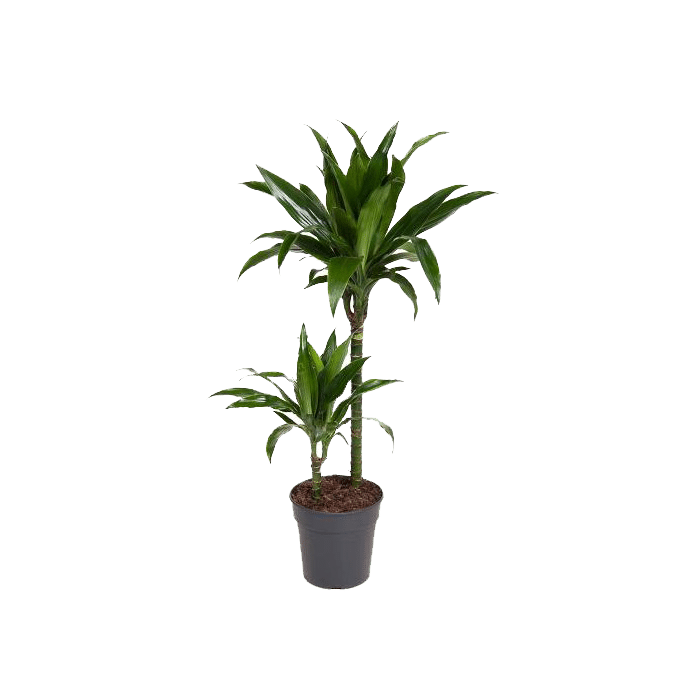
Dracaena fragrans 'Janet Lind', or simply Janet Lind dragon tree, is one of the true aristocrats of indoor plants. With its slender, upward-growing form and deep green, glossy leaves, it fits perfectly into both modern and classic spaces. If you are looking for a plant that thrives in low light but still looks spectacular, 'Janet Lind' is the ideal choice.
The origin of the 'Janet Lind' dragon tree
This special variety originally comes from the tropical regions of West Africa, including Ivory Coast, Cameroon, and Sierra Leone. Although it feels most at home in a subtropical environment, over the decades it has become one of the world's most popular houseplants because it adapts extremely well to the climate of homes and offices. It is often referred to as the "dragon tree" or "corn leaf dracaena."
Characteristics and appearance of the plant
The 'Janet Lind' variety is characterized by clean, defined shapes:
-
Elongated, glossy leaves: Its leaves are deep green, glossy, and elegantly curved. They are characterized by a delicate, light yellow stripe that runs down the center of the leaf, giving the plant a unique contrast.
-
Robust trunk: The leaf clusters sprout from a strong, woody stem, giving it a stable and imposing appearance.
-
Impressive height: Under ideal conditions, it can reach a height of up to 2 meters, making it a great choice for filling empty corners.
-
Fragrant inflorescence: Although rare in indoor conditions, older specimens can produce intensely fragrant inflorescences when they are very comfortable.
Caring for Dracaena 'Janet Lind': A guide to success
This variety is known for being low-maintenance, but it is still worth following these rules:
Light requirements and placement
-
Light conditions: It prefers diffused, indirect light. It is also ideal for rooms with less natural light, as it tolerates partial shade well.
-
Adaptation: It is important to know that 'Janet Lind' takes time to get used to a new environment. Once it has found its place, do not move it unnecessarily!
Watering and climate
-
Moderate watering: Overwatering is the plant's biggest enemy. Always wait until the top layer of soil has dried out before watering again. Standing water can cause root rot.
-
Temperature and humidity: It feels most comfortable at average room temperature. As it is of tropical origin, it likes higher humidity – it will appreciate it if you spray its leaves from time to time.