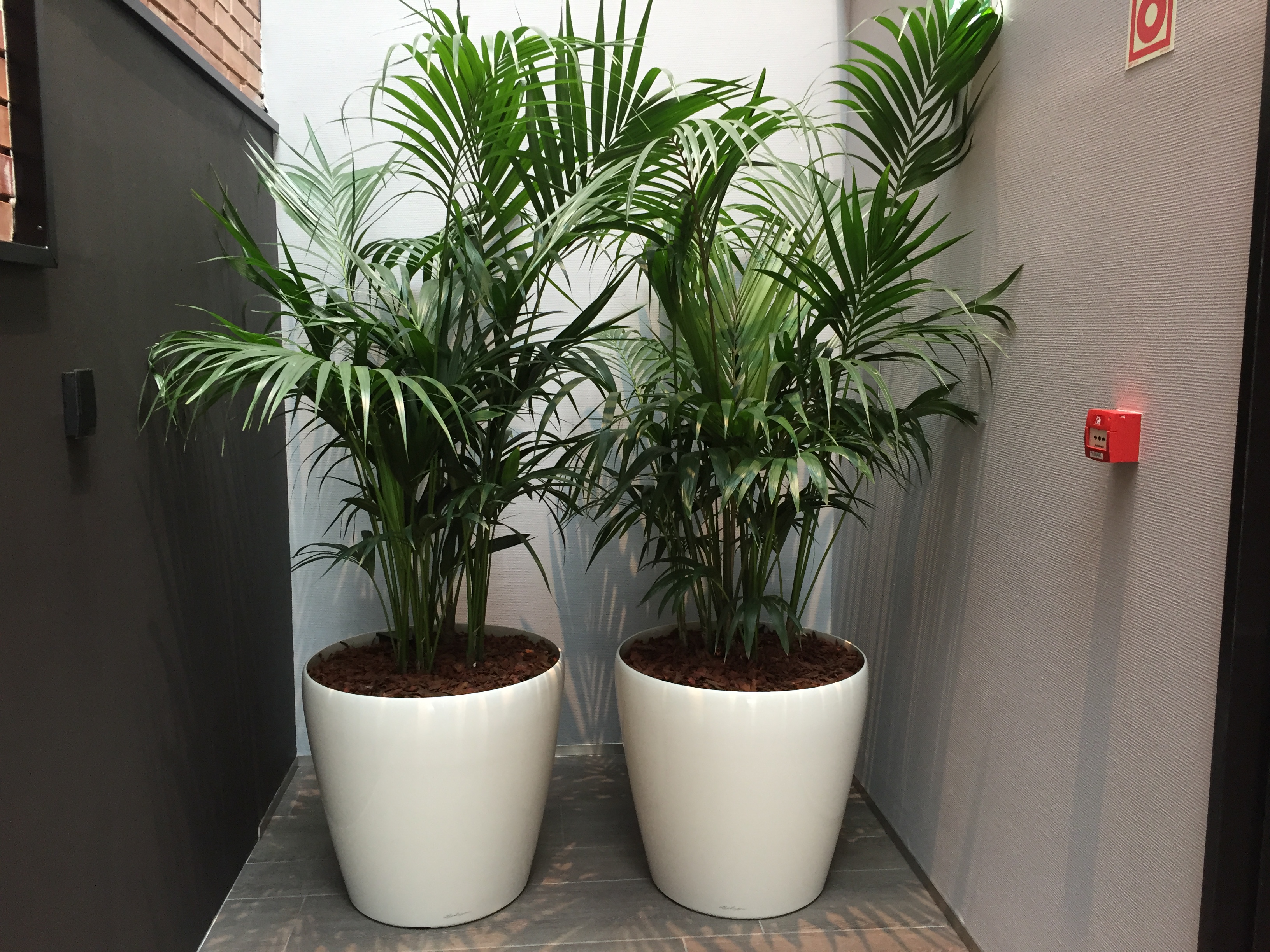
The photo shows two 27 cm diameter, 150 cm tall Kentia palms planted in a 70 cm diameter Lechuza Classico pot. This makes the total height of the plant decoration 200 cm.
Howea forsteriana (Kentia palm) – The queen of palms in your home
Howea forsteriana, better known as the Kentia palm, is the most popular and hardy indoor palm species. With its elegant, airy appearance and dark green, feathery leaves, it brings true tropical luxury to your living room or office. It is no coincidence that it has become a favorite of interior designers: this plant combines a majestic appearance with unparalleled patience.
The origin and history of the kentia palm
The kentia palm originates from one of the most exclusive habitats in the world, Lord Howe Island in the Pacific Ocean (between Australia and New Zealand). This is the only place on earth where it grows in the wild. The island's humid, subtropical climate has shaped the plant's extraordinary adaptability, allowing it to thrive even in the low-light European homes.
Characteristics of Howea forsteriana
The kentia palm is the embodiment of classic palm aesthetics:
-
Elegant leaves: Its long, shiny, deep green leaves are gracefully curved and delicately winged.
-
Growth: With proper care, it can reach a height of 3-4 meters indoors, although its growth is slow and deliberate.
-
Slender trunk: Its trunk is ringed and thin, which is typical of palm trees, but in indoor conditions, the lush, ground-level foliage dominates.
-
Hardiness: One of the best choices for low-light locations, as its slow metabolism means it can thrive even with little light.
Caring for a Kentia palm: Tips for a long-lived ornamental plant
Howea forsteriana has moderate requirements, so anyone can enjoy success in caring for it.
Light requirements and placement
-
Light conditions: It prefers diffused, indirect light. Although it can tolerate shadier corners, its growth almost stops in the dark.
-
What to look out for: Avoid direct southern sunlight, as this can scorch the leaves, and protect it from cold drafts!
Watering and nutrients
-
Watering: Keep the soil evenly moist, but never waterlogged! It is important to allow the top layer of soil to dry out between waterings. Water less frequently in winter.
-
Fertilization: During the spring and summer growing season, it requires regular replenishment of nutrients with special palm fertilizer.
-
Humidity: It will benefit from occasional spraying with soft water, especially in dry, heated rooms.
The browning that appears at the tips of the leaves of the Kenia palm is the nightmare of almost every palm owner, but it can usually be remedied with a little care.
How can you prevent browning at the tips of the leaves?
-
Increase humidity: The kentia palm is accustomed to the humid air of islands. Hungarian homes are very dry during the heating season, which dries out the leaf tips.
-
The "enemy of palms": tap water. Areca palms are sensitive to fluoride and chlorine in water. If too many minerals accumulate in the soil, this will cause the leaf tips to turn brown.
-
Overwatering vs. Dehydration: If the leaf tips are dark brown, this often indicates too much water (the roots are drowning). If they are light brown and dry, the plant is too thirsty.
Pro tip: If the leaf tips have already turned brown, you can cut off the brown part with sharp scissors. Be careful not to cut into the living green tissue, leave a hair-thin brown strip, otherwise the wound will continue to dry out!
Why is the snake plant the best air purifier?
The snake plant is not only beautiful, but also extremely useful. According to NASA research, this species is one of the most effective at neutralizing carbon monoxide, formaldehyde, and benzene in the air. In addition, its huge leaf surface naturally regulates the humidity in the room, which is good for our skin and respiratory tract.