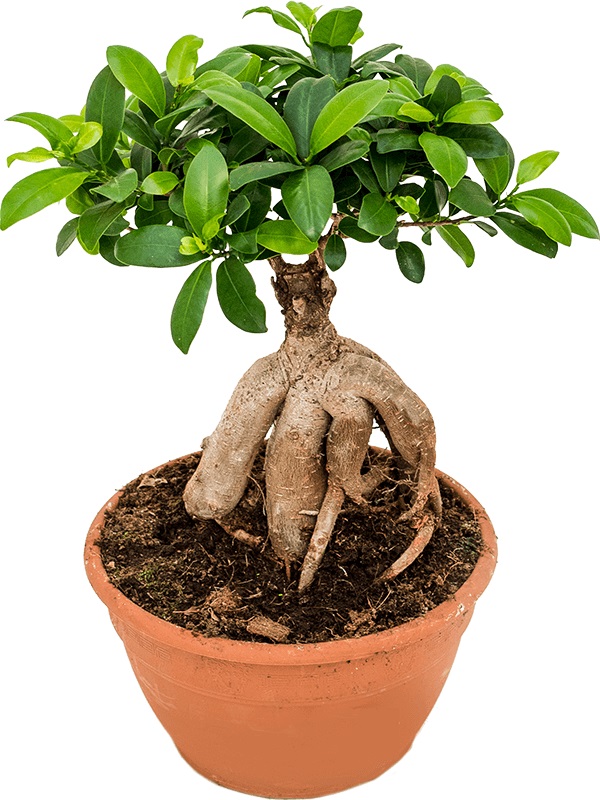
Ficus microcarpa Ginseng – The miniature tree with unique roots
Ficus microcarpa Ginseng, also known as the indoor banyan tree, is one of the most distinctive houseplants. With its unique, sculptural appearance and special root system, it can be a decorative addition to any modern home or office. In this guide, we will show you why this type of ficus is so popular.
The origin and meaning of Ficus Ginseng
This unique plant originates from the tropical regions of Asia, including India, Malaysia, and the Philippines. Its name is also telling: the name "Ginseng" comes from the Chinese term "human root," which refers to the plant's spectacular, fleshy aerial roots that resemble human figures.
Characteristics of Ficus microcarpa Ginseng
Ficus Ginseng is not only a houseplant, but also a kind of "beginner's bonsai" with the following characteristics:
-
Thick aerial roots: The twisted and thick roots growing above the ground give the plant its unique character.
-
Canopy: Its compact, dark green, glossy leaves form a lush canopy above the thick trunk.
-
Growth: A relatively slow-growing species that develops into a spectacular small tree under optimal conditions.
-
Adaptability: Extremely hardy, tolerates indoor environments well, making it suitable for novice plant lovers.
Caring for Ficus Ginseng: Tips for a long life
Ficus microcarpa Ginseng has simple requirements, but it is worth following a few basic rules to ensure its long-term health.
Light requirements and placement
The plant prefers bright locations, but cannot tolerate direct, scorching sunlight, as this can burn its leaves. The ideal location for it is near an east or west window, where it will receive abundant but filtered light.
Watering and climate
-
Moderate watering: Only water when the top layer of soil has dried out slightly. Make sure that there is no standing water underneath!
-
Temperature: It cannot tolerate frost or cold. It prefers a constant, warm room temperature and is sensitive to sudden drafts.
Shaping and pruning
One of the greatest advantages of Ficus Ginseng is that it is easy to prune. If you want to maintain its compact shape or control its growth, you can prune its branches without hesitation. This stimulates the growth of new shoots and makes the foliage denser.
Ficus Ginseng pruning guide
-
When to prune? The ideal time is in late spring or early summer, when the plant is in its most active growth phase. At this time, wounds heal more quickly.
-
The "two-leaf" rule: Allow a branch to grow 6-8 leaves, then cut it back so that only 2 leaves remain. This forces the plant to produce new shoots on the inside of the branch, resulting in a dense and compact canopy.
-
The direction of the shoots: Always cut the branch above a leaf that is facing outwards. The new shoot will grow in the direction of the top leaf. This will prevent the branches from growing into each other.
-
Caution: milky sap! When pruning ficus trees, white, sticky milky sap may be released. This can cause skin irritation, so it is advisable to wear gloves and "seal" the cut with a little water or a damp cloth.
-
Cleaning the aerial roots: If you see thin, dried-out strands among the thick roots, you can cut them off at the base to maintain the plant's aesthetic, clean form.
Pro Tip: After pruning, the plant needs more light for new shoots, but wait 1-2 weeks before fertilizing until the tree settles down.